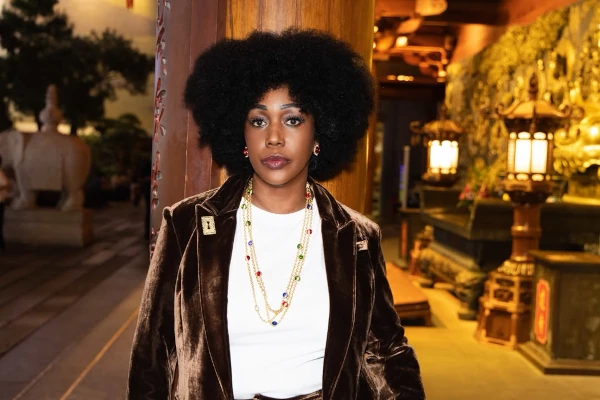
OMOUA AT 50: THE WOMAN, THE RIVER AND THE BEAUTY OF BEGINNING AGAIN
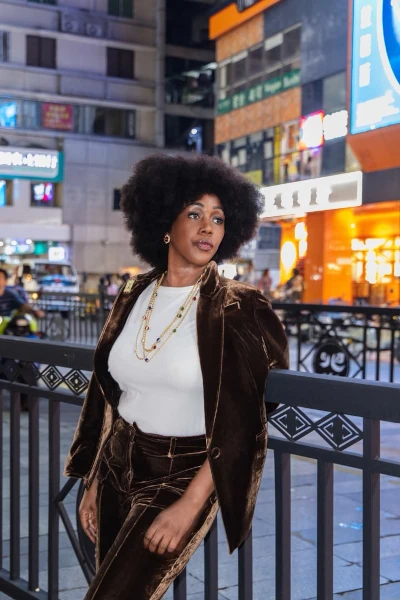
Celebrating Dr. Omoua Alonge Oni-Okpaku (KSM)
By Chris Osa Nehikhare | Publisher, From My Window
There is something about turning fifty.
At twenty, we think we know everything.
At thirty, we begin to suspect that perhaps we don’t.
At forty, life has usually taught us enough lessons to make us considerably less certain about the things we once believed so passionately.
And then comes fifty.
That interesting age when we have lived long enough to know that life is not always what we planned, but hopefully not so long that we have stopped making plans.
For some, fifty is a celebration of survival. For others, it is an opportunity to take stock, count blessings, remember old battles and perhaps quietly forgive a few people who have annoyed us along the way.
For Dr. Omoua Alonge Oni-Okpaku (KSM), who turns fifty today, November 5, 2026, it is something else entirely.
She calls it a rebirth.
And when she explained what she meant, I found myself thinking that perhaps there is something we can all learn from the way she has chosen to approach this milestone.
“As I turn 50, I realise that 50 becomes the first day of the rest of my life.”
Now, that is an interesting way to look at a birthday.
Not as the closing of a chapter.
Not as the beginning of the inevitable complaints about ageing.
But as the opportunity to begin again.
The Wisdom We Carry
When I asked Omoua what turning fifty meant to her, she did not begin by recounting her achievements.
She did not mention the academic qualifications, the government appointments, the professional accomplishments or the traditional honours.
Instead, she went back to her childhood.
To her grandparents.
To something they had taught her many years ago.
“I had the privilege of growing up with my grandparents,” she recalled, explaining how they taught her that at a certain age, a person must learn to rebirth themselves.
What a wonderful lesson to carry through life.
Our grandparents belonged to a generation that did not always have the benefit of today’s technology, endless motivational seminars or the fashionable language of personal development.
But they understood people.
They understood seasons.
They understood that life changes, that circumstances change, and that human beings must sometimes change with them.
Perhaps they also understood something we frequently forget: that growing older and growing wiser are not necessarily the same thing.
One happens naturally. The other requires effort.
For Omoua, that childhood lesson has returned at a particularly meaningful moment.
“And 50 will be my own rebirthing,” she declared.
I like that.
Because there is something liberating about the idea that we are not permanently imprisoned by the people we used to be.
We can learn. We can change. We can become better. And we can begin again. Even at fifty.
Especially at fifty.
The Woman Behind the Titles
Of course, Omoua has accumulated quite a few titles along the way.
She is a lawyer, a scholar, a former Commissioner, an administrator and a traditional chief.
She graduated from the University of Maiduguri in 2001 as the Best Graduating Student in the Faculty of Common/Sharia Law.
Years later, after building a career that took her through legal practice, corporate administration and public service, she returned to academic pursuits, earning a Master’s degree in Public Administration and subsequently a PhD in Comparative Politics from Igbinedion University, Okada.
That tells us something about her.
Not necessarily that she enjoys examinations, although one might reasonably wonder.
Rather, that she appears unwilling to accept that learning should end simply because one has become professionally established.
Her career has taken her through organisations as varied as the Nigerian Bar Association’s Section on Business Law and the Lagos State Waterways Authority, where she eventually served as Acting Managing Director.
In 2018, she became Edo State Commissioner for Environment and Sustainability under Governor Godwin Obaseki.
Beyond her professional accomplishments and traditional honours, Omoua also bears the distinction of Knight of St. Mary (KSM) in the Anglican Church, reflecting another dimension of her religious identity and commitment to faith and service.
Those appointments and honours speak to the breadth of her experience.
But I suspect that the most interesting thing about Omoua is not how many offices she has occupied or titles she has acquired.
It is the willingness to move from one environment to another, to accept new responsibilities and to keep learning along the way.
After all, a person can occupy an office without necessarily growing as a person.
And one can acquire impressive qualifications without acquiring wisdom.
The real value of experience lies in what we allow it to teach us.
And sometimes, experience presents us with a choice that no university degree can prepare us for.
The Courage to Walk Away
In politics, getting an appointment is often a cause for celebration.
Leaving one voluntarily can be an entirely different matter.
Public office brings influence, recognition, responsibility and, inevitably, the temptation to remain within the corridors of power for as long as possible.
But in 2020, Omoua found herself confronting a political decision that would bring her tenure as Commissioner to an end.
She had been appointed by Governor Godwin Obaseki when both belonged to the All Progressives Congress, APC.
Then came the political upheaval surrounding the governor’s bid for a second term.
Obaseki left the APC and joined the Peoples Democratic Party, PDP.
His change of political platform created a new reality for members of his administration.
Those who wished to continue along his political path could move with him.
Others had to decide where they stood.
For Omoua, the decision was to remain in the APC.
Rather than change her political affiliation to accompany the governor, she resigned her appointment as Commissioner for Environment and Sustainability in July 2020.
It was a decision that brought her service in the State Executive Council to an end.
According to Omoua, remaining in her party was the reason she chose to leave.
Now, political loyalty is an interesting subject in Nigeria.
Our political history is filled with defections, realignments, reconciliations and changes of allegiance.
Some politicians change parties because their convictions have changed.
Others cite disagreements, political circumstances or the need to pursue opportunities elsewhere.
And sometimes, the decision to remain where one is can be as consequential as the decision to leave.
What interests me about Omoua’s experience is the personal choice involved.
She had accepted an appointment to serve in government.
When the political circumstances surrounding that appointment changed, she decided not to change parties with the governor.
One may agree or disagree with such a choice. Political decisions are rarely beyond debate.
But the episode reminds us that a career is shaped not only by the positions we accept, but also by the moments when we decide that it is time to leave.
And sometimes, walking away becomes part of the story of who we are.
Which brings me back to something Omoua said about herself.
Nobody Gets It All Right
There was a moment in her birthday reflection that particularly caught my attention.
She paused, then said:
“I’ve not been perfect. It’s been a work in progress.”
I smiled when I heard that.
Not because there is anything amusing about imperfection, but because there is something wonderfully refreshing about hearing someone acknowledge it so freely.
We live in an age when almost everyone appears determined to present a carefully polished version of themselves.
On social media, everybody is successful.
Everybody is happy.
Everybody has made the right decisions.
Everybody’s marriage is wonderful, their children are exceptional, their businesses are thriving, and their lives are proceeding according to some magnificent plan.
Yet those of us who have lived long enough know that real life is rarely so cooperative.
There are disappointments.
There are arguments.
There are decisions we wish we could revisit.
There are people we have hurt, sometimes unintentionally, and people who have hurt us.
There are friendships that survive storms and others that disappear over matters we can barely remember years later.
And there are occasions when we discover, rather painfully, that being right is not always the same thing as being wise.
So when Omoua describes herself as a work in progress, I hear something more meaningful than a convenient expression of modesty.
I hear an acknowledgment that life is a continuing education.
And that perhaps the most important lessons are not always taught in universities.
Thank You for Our Fights
But there was another part of her message that I found even more fascinating.
As she expressed gratitude to her family, friends and loved ones, Omoua said something unexpected.
“Thank you for love and loving. Thank you for our fights. Thank you.”
Our fights?
Now, that is not the sort of thing one usually finds in a birthday appreciation message.
We thank people for their prayers, support, encouragement, generosity and kindness.
But thanking them for our fights?
That requires a certain level of reflection.
Because if we are truthful, some of the people who have helped shape our lives are not necessarily those who agreed with us all the time.
Some challenged us.
Some questioned our decisions.
Some told us uncomfortable truths.
And yes, some probably annoyed us beyond reasonable limits.
Yet with the benefit of hindsight, we sometimes discover that those difficult encounters taught us something valuable.
Perhaps patience.
Perhaps humility.
Perhaps the importance of listening.
Or simply the wisdom of knowing when to walk away from an argument.
I do not know which particular disagreements Omoua had in mind when she recorded those words.
And I have no intention of asking her to reopen old quarrels on her fiftieth birthday.
But I admire the sentiment.
It suggests a willingness to embrace the entirety of life’s journey, not merely the pleasant parts.
To recognise that even difficult relationships can leave behind useful lessons.
And to say thank you, not because everything was perfect, but because every experience contributed something to the person she has become.
The River…
There is another interesting aspect of Omoua’s story.
She is a traditional chief.
Having earlier received a chieftaincy honour in Eti-Oni, Osun State, she subsequently became one of the first women to be conferred with a traditional title in Emme-Ora, Owan West Local Government Area of Edo State.
Her title is Okun Gha Re of Emme-Ora.
And its meaning is quite something.
“When the big river is full, it covers the surrounding small rivers and they tremble.”
Now, imagine that.
A river so full, so powerful, that the smaller rivers around it feel its presence.
It is a title that speaks of strength, influence and authority.
But as I reflected on its meaning, another thought occurred to me.
A great river is not important merely because it is powerful.
Its true significance also lies in what it gives.
The farms it nourishes.
The communities it sustains.
The journeys it makes possible.
The life that flourishes along its banks.
And perhaps that is where Omoua’s traditional title finds an interesting connection with another part of her life.
In 2015, she established the Omoua Oni-Okpaku Foundation, through which she has pursued initiatives focused on women’s empowerment, the girl-child, vulnerable women, widows and unemployed youths.
Her interests include skills development, economic opportunity and advocacy against gender-based violence.
It is work that reflects a belief that influence should have a purpose beyond personal recognition.
There is also something significant about her being among the first women to receive a traditional title in her community.
For a woman committed to greater opportunities for women and girls, it represents another intersection between tradition and changing expectations.
Perhaps the greatest rivers are not those that make the smaller rivers tremble.
Perhaps they are those whose waters help other rivers grow.
The Privilege of Fifty
I have often thought that birthdays become more meaningful as we grow older.
When we are young, we celebrate the excitement of becoming another year older.
Later, we begin to appreciate the privilege of having another year at all.
We become more conscious of time.
Of the people who are no longer with us.
Of the friendships that have endured.
Of the things we once considered important but which now seem remarkably insignificant.
And of the quiet blessings we may have taken for granted.
Omoua’s birthday reflection carries that sense of gratitude.
She thanks her family.
Her friends.
Her loved ones.
She acknowledges God Almighty with unmistakable conviction.
“I thank God Almighty. Him and only Him.”
And she extends her appreciation to everyone who has accompanied her on life’s journey.
There is no attempt to suggest that the journey has been flawless.
Quite the opposite.
She recognises its imperfections.
But she also recognises its blessings.
And perhaps that is one of the most valuable gifts of maturity: the ability to appreciate life without insisting that it must first have been perfect.
A Different Omoua Is Born
As her reflection drew to a close, Omoua made one final declaration.
“A different Omoua Alonge Oni-Okpaku has just been born today.”
I have thought about those words.
What does it mean to become a different person at fifty?
Does it mean abandoning everything that came before?
Surely not.
Our experiences are part of us.
Our achievements, disappointments, relationships, mistakes and victories have all contributed to who we are.
But perhaps rebirth means choosing what we carry forward.
Keeping the wisdom.
Leaving behind unnecessary burdens.
Forgiving where possible.
Learning where necessary.
And recognising that the future does not have to be a repetition of the past.
For Omoua, who has spent much of her professional life navigating institutions and accepting responsibilities, this new chapter may bring different priorities.
Perhaps more time for the people and causes that matter most.
Perhaps greater opportunities to mentor younger women.
Perhaps a deeper commitment to the foundation she established.
Or perhaps simply the freedom to enjoy life with a clearer understanding of what truly matters.
Only she can determine what this new Omoua will become.
But I find the willingness to begin again both admirable and instructive.
From My Window
As Dr. Omoua Alonge Oni-Okpaku celebrates her Golden Jubilee today, I find myself returning to the image of that great river.
A river does not become great overnight.
It gathers its waters from different sources.
It travels through unfamiliar territories.
It encounters obstacles.
Sometimes it flows gently.
Sometimes it struggles against the terrain.
And sometimes it overflows its banks.
But through it all, it continues its journey.
So it is with life.
Fifty years of living cannot be reduced to academic qualifications, professional appointments, political associations or traditional honours.
Those things have their place.
But the real story is often found elsewhere.
In the values inherited from grandparents.
In the choices made when circumstances change.
In the courage to acknowledge imperfection.
In the generosity to appreciate friends and even forgive old disagreements.
In the desire to make life a little better for others.
And in the remarkable ability to look at fifty years already lived and still say, with conviction, that the journey is only beginning.
Omoua has chosen to call this moment her rebirth.
I think that is a beautiful way to celebrate a Golden Jubilee.
Because perhaps the greatest achievement at fifty is not being able to say, look at everything I have done.
Perhaps it is being able to say, look at everything I can still become.
Happy 50th Birthday, Dr. Omoua Alonge Oni-Okpaku (KSM).
May the years ahead bring good health, happiness, wisdom, peace and fulfilment.
May the lessons of yesterday become the strength of tomorrow.
May the love of family and friends continue to surround you.
And may the great river of your life continue to flow, not only with strength and purpose, but with the generosity to nourish the lives it encounters.
As you begin this new chapter, may you find joy in the simple things, courage for the difficult things, and gratitude for all things.
For fifty is not the end of the story. It may just be the beginning of its most beautiful chapter.
From My Window | A view. An opinion. Our Reality.

Leave a Reply