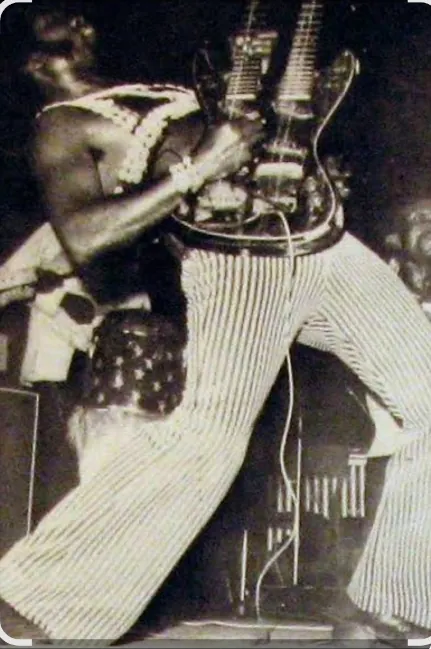
History remembers certain individuals not merely for what they achieved, but for the joy they brought to others.
Their names become woven into the cultural fabric of a nation. Their work transcends generations and their legacy outlives trends and fashions.
Sir Victor Efosa Uwaifo belongs unmistakably to that rare and distinguished category.
To many Nigerians, he was simply “The Guitar Boy.” To others, he was the creator of the immortal classic Joromi.
But to Edo people, and indeed to lovers of culture across the world, Sir Victor Uwaifo was something much greater. He was an artist, musician, scholar, inventor, cultural ambassador and one of the most gifted sons ever produced by Edo State.
Born on March 1, 1941, in Benin City, Victor Uwaifo grew up surrounded by the rich traditions, artistry, and history of the ancient Benin Kingdom.
Long before he became famous, there were already signs of extraordinary talent. He possessed a restless creative spirit.
Music fascinated him.
Art inspired him.
Innovation excited him.
And throughout his life, he would pursue all three with remarkable passion.
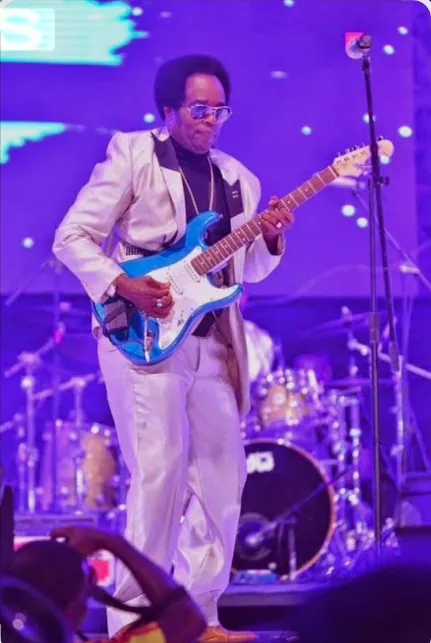
His rise to national prominence came during the golden era of Nigerian Highlife music. At a time when the country was discovering its post-independence identity, Victor Uwaifo emerged as one of the brightest stars on the cultural horizon.
Then came Joromi. The song was more than a hit. It became a phenomenon.
Its infectious rhythm, unforgettable melody, and uniquely Nigerian character captured hearts across the country. From Lagos to Kano, Port Harcourt to Kaduna, Nigerians sang along.
For many people outside Edo State, Joromi became their first introduction to the beauty and richness of Edo culture.
Decades later, the song remains one of the most recognizable recordings in Nigerian musical history.
But Victor Uwaifo was never content with being merely popular. He wanted to innovate, create and push boundaries.
That desire earned him the nickname that would become legendary — The Guitar Boy.
His style blended traditional African rhythms with modern instrumentation in ways that felt fresh, distinctive, and unmistakably Nigerian. He developed a sound that crossed ethnic, cultural, and geographical boundaries.
Long before Nigerian music became a global export, Victor Uwaifo was already carrying African sounds onto international stages. What made him truly unique, however, was that his creativity extended far beyond performance.
Unlike most musicians of his generation, he approached music not only as an artist but also as an inventor. He designed and patented musical instruments. He experimented with sound and explored new possibilities in musical expression.
Few African musicians can claim such achievements. Even fewer pursued them with such enthusiasm. Yet perhaps the most remarkable chapter of his life came after many would have considered retirement.

Instead of slowing down, Victor Uwaifo turned increasingly toward scholarship. He returned to academia and eventually earned advanced qualifications that culminated in his appointment as a professor. The transformation was extraordinary.
The same man who had thrilled audiences around the world with his music now stood before students as a respected academic. It was a reminder that learning has no age limit and that true excellence continually seeks new horizons.
His contributions were not limited to music and education.
He also served Edo State in public office as Commissioner for Arts, Culture and Tourism. In that role, he championed the preservation and promotion of cultural heritage, recognizing that societies thrive when they understand and celebrate their history.
Throughout his life, Sir Victor Uwaifo remained deeply connected to the culture that shaped him. Whether through music, sculpture, painting, teaching, or public service, he never stopped telling the story of his people.
He became one of the most recognizable cultural ambassadors Nigeria ever produced.
At a time when African culture often struggled for global recognition, Victor Uwaifo proudly showcased the creativity, sophistication, and beauty of the continent.
His success demonstrated that local stories could achieve international relevance. That indigenous culture could command global respect and that authenticity remained one of the most powerful forms of artistic expression.
When Sir Victor Uwaifo passed away in August 2021, Nigeria lost far more than a musician.
We lost a cultural institution a creative genius, scholar an innovator. We lost one of the most passionate custodians of Edo heritage.
Yet true artists never really leave. Their voices continue to echo through their work as their influence survives in the generations they inspire and their legacy remains alive in the culture they helped preserve.
Today, whenever Joromi plays, whenever discussions arise about the pioneers of Nigerian music, and whenever Edo culture is celebrated on the global stage, the spirit of Sir Victor Uwaifo remains present.
His life reminds us that greatness is not confined to a single profession. A person can be an artist and a scholar, an entertainer, an inventor a cultural ambassador and a public servant.
Sir Victor Uwaifo was all of these and more.
In celebrating Sir Victor Uwaifo, we celebrate creativity innovation culture and an Edo son whose talent carried the story of his people far beyond the shores of Nigeria.
He did not merely entertain a nation.
He enriched its soul.
And for that, Sir Victor Uwaifo remains an enduring Edo Icon.
“The greatest tribute to extraordinary lives is remembrance. They live on in the stories people refuse to stop telling.”
Chris Osa Nehikhare


Leave a Reply