By Dr. Harrison I. Okao, JP, Ph.D.
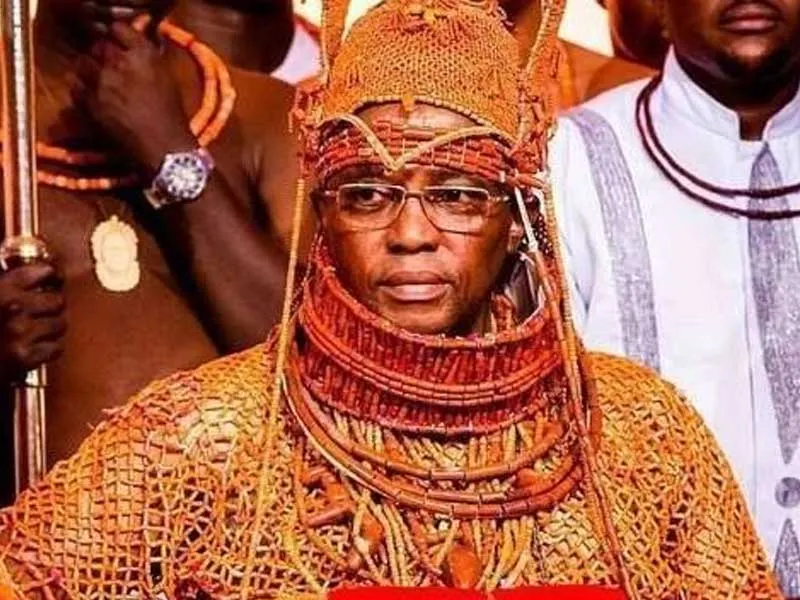
Eguae Oba N’Edo, the Palace of the Oba of Benin, is not simply a royal residence. For the Benin people, it represents a place where history, spirituality, tradition, authority and identity converge.
Every Benin descendant should therefore understand that the Palace has both a physical and an institutional meaning. Its walls are important, but the traditions, sacred responsibilities, ancestral memory and cultural authority associated with it are even more important.
The Palace as a Sacred Space.
The spiritual significance of the Palace is fundamental to understanding its place in Benin society.
The Palace has traditionally contained sacred spaces and ancestral altars connected with past Obas. They represent the continuing relationship between the living, the ancestors and the spiritual traditions of the Kingdom.
The Palace is therefore not simply a place where administrative decisions are made. It is traditionally understood as a sacred centre of the Kingdom. This sacred character helps explain the reverence attached to the Palace and the Oba, and why important traditional ceremonies and rites are associated with it.
The Spiritual Relationship Between the Oba and the Palace.
The spiritual and institutional roles of the Oba cannot easily be separated from the Palace. The Palace provides the physical setting within which many aspects of royal tradition are preserved and expressed. It is associated with ancestral memory, traditional rites, festivals and the continuity of the Benin monarchy.
In this sense, the Palace represents a bridge between generations.
The ancestors are remembered there.
The present generation receives its heritage there.
And future generations are expected to inherit that heritage.
Benin history and civilisation place considerable importance on ancestry. The dead are not simply forgotten members of a previous generation; they remain part of the historical and spiritual consciousness of the community.
The ancestral altars associated with the Palace therefore have significance beyond their physical existence. They represent continuity.
They remind the living that every generation inherits responsibilities from those who came before it. This understanding should be preserved as part of Benin historical knowledge, even as contemporary Benin people hold different religious beliefs and interpretations.
The Palace as the Centre of Traditional Authority.
The Palace is also functions as the institutional centre of Benin traditional authority. It is connected to the conferment and recognition of important traditional titles and to ceremonies that reinforce the structure of Benin society. The Palace provides the central reference point around which many traditional institutions operate.
This is why weakening the understanding of the Palace can ultimately weaken understanding of the wider traditional system.
The Palace and Benin Festivals.
Major traditional festivals and royal ceremonies are important expressions of Benin identity. They are not simply occasions for dancing, dressing in traditional clothes or entertainment. They carry historical and spiritual meanings. They provide opportunities for thanksgiving, remembrance, prayers, renewal and communal solidarity.
The Palace remains central to this traditional cycle.
Consequently, every Benin descendant should learn not merely the names of these festivals, but also their historical significance and the reasons they remain important.
The Palace as a Symbol of Resilience.
Few events demonstrate the resilience of Benin civilisation more dramatically than the British invasion of 1897. Benin City was attacked, and the Palace was destroyed and looted. Yet the institution survived.
The destruction demonstrated that physical buildings can be attacked, but institutions rooted in the consciousness of a people can survive. The Palace therefore carries another powerful message: Benin identity survived because the people preserved the institution.
That lesson remains relevant today.
The Palace and the Modern Benin Person.
Modernisation does not make the Palace irrelevant. Instead, it creates a new responsibility.
The challenge is to ensure that the Palace remains a living institution rather than merely a monument to the past. This requires documentation, education, cultural preservation and responsible engagement with younger generations.
The Palace should remain a place where history is understood, culture is preserved and the future of Benin identity is discussed.
The Implications of Disrespecting the Palace.
Disrespect for the Palace should not be understood merely as disrespect towards a building. When an institution is deliberately ridiculed or reduced to partisan politics, the deeper danger is the erosion of collective historical consciousness. This does not mean that every action or decision associated with the Palace must be beyond discussion. Rather, criticism should be informed, respectful and directed at issues rather than motivated by a desire to destroy the institution itself.
A people who cannot distinguish between constructive criticism and cultural contempt risk weakening institutions that took generations to build.
The responsibility of rvery Benin descendant is
to ensure the preservation of the Palace and its meaning as a collective responsibility.
We must teach our children.
We must document our history.
We must preserve our language and culture.
We must protect our artefacts.
We must understand our festivals.
We must respect our traditional institutions, and we must ensure that modernisation does not become cultural amnesia.
This responsibility is particularly important for Benin people in the diaspora. Distance from the Kingdom should not mean distance from its history.
The true value of Eguae Oba N’Edo is not only what it represents from the past. It is also what it can represent for the future. It can serve as a bridge between ancestral heritage and contemporary Benin identity.
It can help young people understand where they came from without preventing them from participating fully in the modern world.
That balance is essential.
A people do not become modern by forgetting who they are. They become stronger when they can enter the modern world with a clear understanding of their historical identity.
The Final Responsibility.
The Palace cannot preserve Benin identity alone.
The Oba cannot preserve it alone.
Traditional chiefs cannot preserve it alone.
The responsibility belongs to the entire Benin people.
Every generation receives the heritage and eventually becomes its custodian.
Our responsibility, therefore, is not simply to inherit the Palace. It is to understand what it represents. It is to respect its spiritual and cultural significance. It is to protect its historical memory. It is to allow responsible reform where necessary. And, above all, it is to ensure that the generation coming after us does not inherit the name “Benin” without understanding the civilisation behind it.
Eguae Oba N’Edo is more than a Palace. It is a sacred and historical symbol of the continuity of Benin civilisation.
To protect its meaning is to protect an important part of ourselves.
Oba ghator ’kpere, Ise.
Dr. Harrison I. Okao, JP, Ph.D., holds a Doctor of Public Administration from the University of Benin. He served as Presiding Priest of the Holy Aruosa Cathedral from 2005 to 2021 and is presently the Director-General of the Centre for Good Governance, Development and Socio-Cultural Advocacy.
From My Window | A view. An opinion. Our Reality.


Leave a Reply