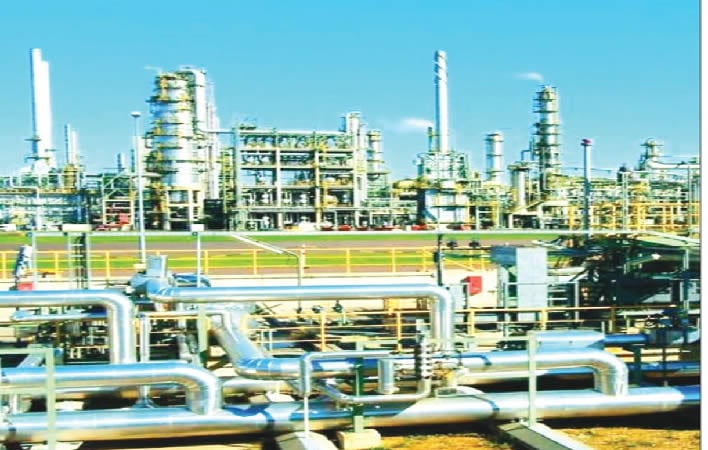
Crusoe Osagie explains that Dangote has earned the right to a duel with unscrupulous employees of Nigerian regulatory institutions, individuals with virtually no skin in the game, yet hellbent on making decisions capable of consigning Nigeria to the abyss while dragging Dangote along with it.
Nigeria at the moment is clearly overleveraged. A recent report released by the Alliance for Economic Research and Ethics stated that in the past 24 months, the Nigerian state has borrowed about N66 trillion, a figure it revealed was more than all the debt Nigeria accumulated during the previous 55 years combined.
This debt figure is clearly alarming, but even more troubling is the fact that it is difficult to identify the critical infrastructure, security improvements, or transformational economic programmes that these borrowings were undertaken to finance. Across the country, roads remain largely decrepit, electricity generation continues to fluctuate below 5,000 megawatts for over 200 million citizens, insecurity persists in several regions, and inflation has continued to erode household income and business profitability.
According to the Alliance for Economic Research and Ethics, the recent borrowings have pushed the nation’s total public debt to about N159.2 trillion. When broken down, this translates to roughly N670,000 owed by every Nigerian alive today. Nigeria’s debt service-to-revenue ratio has also remained among the highest in the world, with reports from the Debt Management Office and international financial institutions showing that a significant percentage of government revenue is now used simply to service debt obligations.
For many citizens, should Nigeria fail economically, this N670,000 exposure may represent the full extent of their stake in the country. Others have far greater exposure through savings in banks, investments in the capital market, ownership of bonds, treasury bills, pension assets, and other financial instruments tied directly to the survival of the Nigerian economy.
Meanwhile, some Nigerians carry even greater exposure than the aforementioned categories in the event of an insolvent Nigeria: owners of businesses ranging from micro and small enterprises to industrial conglomerates. However, with a total investment portfolio estimated at over 35 billion United States dollars within Nigeria, Aliko Dangote, President of Dangote Industries Limited, is arguably the single most invested individual in the Nigerian state today.
To put this in plain language, if Nigeria as a nation goes belly up today, the individual who most likely stands to suffer the greatest personal financial loss is Aliko Dangote. His exposure to Nigeria probably exceeds that of any current or former president, minister, or policymaker taking decisions that steer the Nigerian economy, sometimes recklessly, toward uncertainty.
Dangote’s investments are not speculative portfolio holdings that can be moved overnight to offshore accounts or foreign safe havens. They are hard assets physically rooted in Nigeria: cement plants, fertilizer plants, refineries, petrochemical complexes, agricultural ventures, logistics infrastructure, and thousands of kilometres of distribution networks employing tens of thousands of Nigerians directly and indirectly.
The Dangote Refinery alone, reputed to be the largest single-train refinery in the world with a refining capacity of 650,000 barrels per day, represents one of the most ambitious industrial projects ever undertaken on the African continent. The refinery was conceived largely to solve Nigeria’s embarrassing dependence on imported petroleum products despite being Africa’s largest crude oil producer. Nigeria has spent decades exporting crude oil only to import refined products at enormous cost, placing immense pressure on foreign exchange reserves and weakening the naira.
This story was first published by Thisday Newespapers.



Leave a Reply