By Chris Osa Nehikhare | Publisher, From My Window
There was a time when gaining admission into a Federal Government College was a very big deal.
The Unity Schools represented something special in Nigeria. They brought young Nigerians from different ethnic, religious and social backgrounds together. A child from Benin could share a dormitory with another from Kano, Enugu, Sokoto or Calabar. Friendships were formed before prejudices had the opportunity to take root.
But beyond their role in national integration, they were centres of excellence.
Somewhere along the line, however, we allowed that standard to slip.
Government has simply not demonstrated that it can adequately fund, maintain and continuously modernise these schools. Buildings deteriorate. Laboratories become obsolete. Sporting facilities decline. Hostels and classrooms come under pressure. Teachers and administrators are expected to produce excellent results without always having excellent tools.
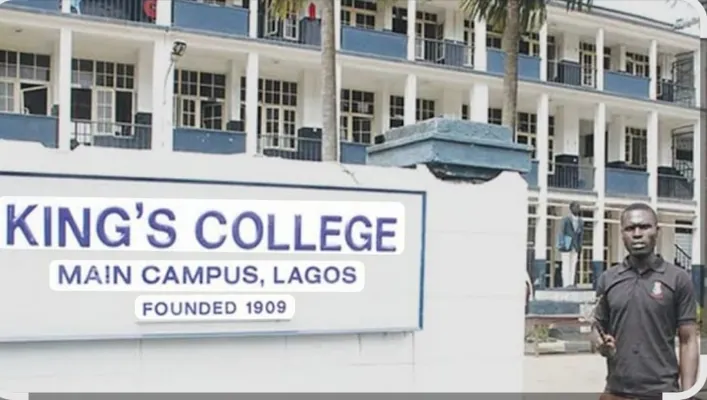
So when I hear the controversy surrounding the concession of King’s College, Lagos, I understand the anxiety. But I am not persuaded that preserving the status quo is the answer.
Let us first be clear about what has happened.
King’s College has not been sold.
The Federal Government retains ownership of the land and buildings. What has been transferred, under a 35-year Public-Private Partnership concession, is responsibility for management, funding, rehabilitation and operation to the King’s College Old Boys’ Association.
That distinction is important.
And perhaps even more important is the question Nigerians should be asking:
If government has struggled for decades to provide the resources necessary to restore these institutions to their former glory, should we reject an alternative simply because it is different?
I think not.
Indeed, properly structured, concessioning could become one of the most important reforms of the Unity School system.
Imagine what strong alumni organisations, private-sector discipline and independent funding could bring to these schools: modern science and technology laboratories, properly maintained hostels, improved sporting facilities, reliable electricity and water, digital classrooms, stronger teacher development programmes and a maintenance culture that does not wait for another federal budget before repairing a leaking roof.
There is another advantage that is often overlooked: accountability.
When everybody is responsible, sometimes nobody is responsible.
A concession agreement establishes measurable obligations. The operator knows what it has undertaken to deliver. Government remains the owner and regulator and should establish clear performance benchmarks. Parents, alumni and the public can then judge whether those commitments are being met.
There is also the enormous potential of the alumni networks themselves.
Many Unity Schools have produced some of Nigeria’s most accomplished professionals, entrepreneurs, public servants and academics. These men and women possess resources, expertise, international networks and, importantly, an emotional investment in the institutions that helped shape them.
Why shouldn’t Nigeria harness that?
The reported ₦100 billion rehabilitation ambition for King’s College gives an indication of what can become possible when government resources are complemented by private capital and alumni commitment.
Of course, there must be red lines.
A Unity School must not become an exclusive school for wealthy Nigerians simply because it has been concessioned. Admission must remain transparent and nationally representative. Fees must remain within a framework that protects accessibility. Scholarships and safeguards for children from less privileged backgrounds should be mandatory.
Teachers and other employees must also be treated fairly.
And government cannot simply hand over the keys and walk away. The Federal Ministry of Education must remain an active regulator, monitoring academic standards, admissions, fees, infrastructure commitments and compliance with the objectives for which Unity Schools were established.
These concerns are legitimate. The unions are right to ask questions.
But there is a difference between demanding safeguards and rejecting reform.
The argument that King’s College may become a precedent for other Unity Schools does not frighten me. If the King’s College experiment succeeds—if infrastructure improves, academic standards rise, teachers are better supported and students receive a better education—then perhaps it should become a precedent.
We should not defend a failing system merely because we are familiar with it.
Nigeria has spent too many years believing that government must personally operate everything it owns. Ownership and management are not the same thing. Government can retain ownership, establish the rules, protect the public interest and hold an operator accountable without necessarily running the institution day to day.
We already accept variations of this principle in infrastructure and other public services. Education should not be immune from innovative thinking simply because change makes us uncomfortable.
What matters is the structure.
Concessioning without regulation can become exploitation. Concessioning without protection for poorer families can deepen inequality. Concessioning without measurable obligations can simply replace public-sector inefficiency with private-sector profiteering.
But properly regulated concessioning can mobilise capital, expertise, accountability and innovation that government alone has been unable to provide.
That is the opportunity before us.
The Unity Schools were created to bring Nigeria’s best young minds together and give them an education worthy of the country’s ambitions. The objective was never that government must forever be the sole financier and operator of every classroom, hostel and laboratory.
The objective was excellence.
If the present model is no longer delivering that excellence, then we must have the courage to change the model while protecting the principle.
Let King’s College be closely watched. Let the concession agreement be transparent. Let government publish the performance benchmarks. Let Nigerians know what the concessionaire has promised and let us hold both government and KCOBA accountable.
And if, five or ten years from now, King’s College is once again competing with the finest secondary schools anywhere in the world, perhaps we will look back and wonder why we were so afraid to try.
Sometimes protecting an institution does not mean preserving the way it has always been run.
Sometimes protecting it means having the courage to save it from decline.
From My Window | A view. An opinion. Our Reality.




Leave a Reply