By Chris Osa Nehikhare | Publisher, From My Window
Now, the true picture is beginning to emerge. And frankly, it is unacceptable.
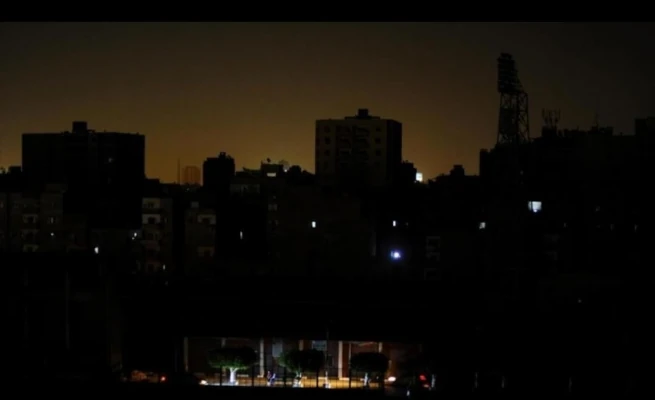
For days, Edo State has been plunged into darkness following industrial action by the National Union of Electricity Employees (NUEE) at the Benin Electricity Distribution Company (BEDC).
Like many Edo people, I initially directed my anger at BEDC and the unions. I questioned the wisdom of shutting down electricity supply and punishing innocent consumers over disagreements between management and workers.
I still believe that innocent citizens should never become casualties of industrial disputes.
But recent developments have compelled me to reconsider where responsibility for the prolonged blackout lies.
The original industrial dispute has reportedly been resolved. Electricity has been restored in Ondo, Delta and Ekiti States, the three other states within BEDC’s franchise area.
Yet Edo remains in darkness.
Why?
According to BEDC’s latest statement, the obstacle is now a separate, unresolved disagreement between the Edo State Government and the Nigeria Labour Congress (NLC).
Suddenly, what appeared to be an ordinary industrial dispute has taken on a troubling political dimension.
Are Edo people being used as pawns in a political power game?
How Did We Get Here?
Before the present administration, relations between the Edo State Government and organised labour were generally characterised by engagement and dialogue, even when disagreements arose.
That relationship appears to have deteriorated following the change of administration.
At the centre of the present controversy are serious allegations of political interference in the leadership of the Edo State NLC.
It has been alleged that the transition in government was followed by an attempt to displace the existing labour leadership and recognise a new acting chairman.
There are also claims that the national leadership of the NLC intervened and directed that fresh elections be conducted, but that the disagreement over the legitimacy of the state leadership remained unresolved.
These allegations deserve a full public explanation from all concerned.
If established, they would raise a fundamental question: since when did a state government acquire the authority to determine who leads an independent labour organisation?
Trade unions are not departments of government. Their leadership should emerge from their constitutions, democratic processes and applicable laws, not the political preferences of whoever occupies Government House.
A government may disagree with union leaders. It may challenge their positions or seek legal remedies where necessary.
But it must respect the independence of organised labour.
The initial strike by NUEE concerned workers’ conditions of service, remuneration and welfare.
Those were matters between employees and their employer.
Following negotiations involving BEDC management and national labour representatives, an agreement was reached that permitted operations to resume in the other affected states.
Edo was excluded.
BEDC has now publicly appealed to the Edo State Government and the NLC to resolve what it describes as a peculiar disagreement preventing the restoration of electricity.
That statement is significant.
It suggests that the continued blackout can no longer be explained solely by the original dispute over workers’ welfare.
The outstanding issues now require direct answers from the government and the competing labour leaderships.
What precisely is preventing the restoration of power?
What demands remain unresolved?
And why must the entire state remain without electricity while those questions are being settled?
There is a wider principle at stake. The independence of trade unions is an essential part of democratic society.
A union cannot effectively defend its members if its leadership is subject to the approval of the government it may occasionally need to challenge.
The controversy surrounding the Edo NLC therefore deserves more than political rhetoric.
If elected officers have a lawful mandate, that mandate should be respected. If their election is disputed, the appropriate union procedures and judicial processes should determine the outcome.
Neither political pressure nor competing declarations of legitimacy should substitute for due process.
The controversy also brings to mind earlier disputes between the present administration and elected local government officials.
Those disputes raise their own constitutional and legal questions, but the underlying concern is similar: political authority must operate within the limits of the law.
Winning an election does not confer ownership of every independent institution in the state.
Even more disturbing are allegations that a state NUEE official was attacked or forcibly taken away by persons allegedly associated with one faction of the labour leadership.
These are serious claims which must not be treated casually.
BEDC itself has expressed concern over reports of forceful arrests of protesters.
The circumstances surrounding any alleged assault, abduction or unlawful detention must be independently established.
If crimes were committed, those responsible should face the law, regardless of their political connections or labour affiliations.
No disagreement over union leadership can justify violence.
No individual should be intimidated for exercising lawful trade union rights.
And no government should tolerate politically motivated attacks, whether committed by its supporters or its opponents.
I Was Wrong to Blame BEDC Alone
I have no difficulty admitting when new information changes my understanding of an issue.
When this blackout began, I was among those who criticised BEDC and the unions for allowing an industrial dispute to disrupt electricity supply.
My concern was, and remains, the suffering of ordinary consumers.
But BEDC’s latest disclosure changes the picture.
The company says the broader dispute has been resolved, while an outstanding disagreement involving the Edo State Government and organised labour continues to prevent operations from resuming in Edo.
That explanation does not absolve BEDC of its wider responsibilities to electricity consumers.
Neither does it establish every allegation being made against the state government.
But it certainly demands accountability.
The government must explain its role in the dispute and what it is doing to remove the remaining obstacles to electricity restoration.
Edo people deserve facts, not political accusations traded across press conferences.
My Appeal to the NLC: Take the Higher Road
I understand why organised labour would resist interference in its internal affairs.
The principle of union independence is worth defending.
But I must now appeal directly to the national leadership of the NLC and NUEE.
Please take the higher road.
The hardship being imposed on Edo people is becoming unbearable.
Small businesses are losing income. Families are spending money they can scarcely afford on alternative power. Hospitals and other essential services face increased operating costs.
The economic consequences extend far beyond the immediate parties to the dispute.
Whatever the disagreement over labour leadership, the restoration of electricity should not remain its bargaining instrument.
There are courts. There are lawful industrial relations procedures. There are opportunities for mediation and arbitration.
Any union official who has been unlawfully attacked or detained should be able to seek justice through the appropriate institutions.
The question of legitimate NLC leadership can and should be resolved through the union’s constitutional processes and the courts where necessary.
But Edo people should not have to remain in darkness while that battle continues.
Defend your independence, certainly. But please do not make innocent citizens pay the price.
The Edo State Government also has a responsibility to act with urgency, restraint and transparency.
Its position is that it has been engaging the relevant stakeholders and seeking an early resolution of the crisis.
Those efforts are welcome, but they must produce results.
The government should clarify the nature of its disagreement with the labour leadership, explain its position on union recognition and demonstrate its willingness to accept a lawful resolution.
At a time when citizens are struggling with rising living costs and difficult economic conditions, prolonged electricity disruption adds another burden they should not have to bear.
Political disagreements are inevitable. Institutional disputes can be resolved.
But the welfare of the people must never become secondary to the desire to prevail in a contest for influence.
From My Window
As I look out of my window, I see more than a state without electricity.
I see a troubling test of leadership, institutional independence and public responsibility.
The original dispute between BEDC and its workers appears to have been substantially resolved.
What remains is a disagreement whose political and institutional dimensions must now be openly addressed.
I have criticised the unions before, and I will continue to criticise them whenever their actions unnecessarily hurt innocent consumers.
But I will also question any government whose conduct, decisions or unresolved disagreements contribute to the suffering of the people it was elected to serve.
The Edo State Government must respect the lawful independence of organised labour.
The NLC must pursue its legitimate grievances without holding electricity consumers hostage.
And BEDC must work with all parties to restore supply as quickly and safely as possible.
Edo people are not pawns.
They are citizens entitled to accountable government, independent institutions and essential services.
Restore our electricity. Resolve your differences. And leave the people out of your power struggle.
History has a way of remembering how leaders behave when ordinary people need them most.
From My Window | A view. An opinion. Our Reality.




Leave a Reply