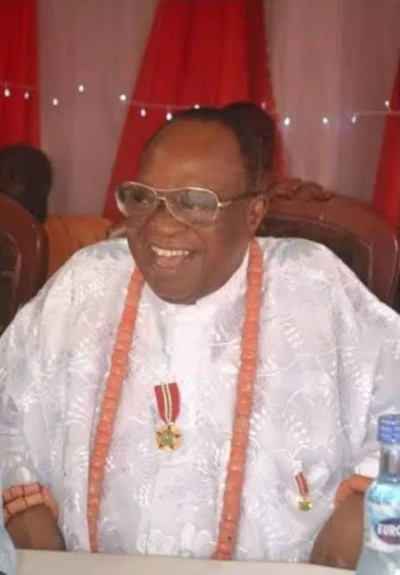
The Oracle of Benin: A Life of Tradition, Courage and Conviction
By Chris Osa Nehikhare | Publisher, From My Window
There are men who witness history.
There are men who participate in history.
And then there are those extraordinary individuals who become living repositories of history itself.
Chief David Uyunmwun Edebiri, OON, the Esogban of Benin Kingdom, belonged unmistakably to that rare and distinguished category.
He was a nationalist. A journalist. A politician. A historian. A traditional statesman. And, to me, something even more personal.
He was a mentor.
For much of his 93 years, Chief Edebiri stood at the intersection of tradition and modernity, witnessing the transformation of Nigeria from a British colony into an independent nation, through military dictatorships, political upheavals, and successive democratic experiments.
Yet, through it all, he remained unmistakably Benin. Proud of his heritage. Unapologetic about his convictions. And fiercely protective of the institutions, traditions and history of his people.
He was a man who could discuss the intricacies of Benin palace traditions in one breath and the political calculations of Nigeria’s First Republic in the next.
His memory was extraordinary.
His intellect was formidable.
And his personality was unforgettable.
My relationship with Chief Edebiri began long before I understood his significance.
As a young boy, I knew him simply as the father of my friend, Timson.
I was a regular visitor to their residence on Ogiesoba Street in Benin City.
In those days, children understood certain unwritten rules. You respected your elders, particularly the fathers of your friends, and you certainly did not invite unnecessary attention by staring at them.
So, although I frequently visited the Edebiri home, I knew very little about the remarkable man who lived there.
That would change many years later.
In 1998, following the death of General Sani Abacha and the commencement of General Abdulsalami Abubakar’s transition programme, I was placed under Chief Edebiri’s political tutelage.
It was an education unlike anything a university could offer.
I attended political meetings at his residence, listening, observing and trying to understand the personalities and competing interests shaping Nigeria’s emerging democratic landscape.
But the real lessons often came the following morning.
Sometimes as early as six o’clock, I would return to his home.
There, Chief Edebiri would patiently dissect the previous evening’s discussions.
He explained what had been said.
What had been left unsaid.
Who was aligned with whom.
And, perhaps most importantly, why certain individuals behaved as they did.
He understood politics not merely as the contest for power, but as the study of human behaviour, ambition, loyalty and circumstance.
His recollection of events and personalities stretched across generations.
He was, quite simply, a walking encyclopedia.
Looking back, I realise how privileged I was to have received those lessons.
Long before he became the Esogban of Benin, David Edebiri had already established himself as a man of strong political convictions.
Born on September 2, 1929, he came of age when Nigeria was still under British colonial rule and nationalist agitation was gathering momentum.
As a young student, he became involved in the Zikist Movement, the radical nationalist organisation inspired by the political ideas of Dr Nnamdi Azikiwe.
He belonged to a generation of young Nigerians who believed that colonial domination had to end and that the destiny of the country should rest in Nigerian hands.
Among the personalities who influenced his political development was Chief Anthony Enahoro, the celebrated nationalist and another illustrious Edo son.
Edebiri would later become associated with Chief Obafemi Awolowo and the Action Group.
His political journey reflected the ideological struggles and changing alliances that characterised Nigeria’s independence movement.
He was not merely an observer of those historic developments. He participated in them.
And unlike many who eventually abandoned their convictions for political convenience, Chief Edebiri remained a man of strongly held opinions.
He could be uncompromising. He could be controversial. But he was rarely indifferent.
For him, politics was serious business. It was about ideas, organisation, history and the future of society.
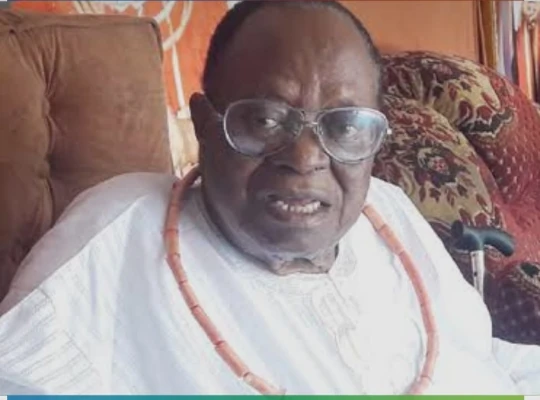
…The Power of Communication
Before the age of social media, when political influence was exercised through newspapers, public meetings and carefully crafted statements, Chief Edebiri understood the enormous power of communication.
He worked as a journalist and developed a reputation as a forceful writer and political commentator.
His association with the press gave him a platform through which he could challenge prevailing ideas, defend political positions and contribute to national debates.
He understood something that remains relevant today.
Words matter.
They can inspire movements, challenge authority, preserve history and, when used responsibly, they can help shape the conscience of a nation.
Perhaps this explains why, even in old age, Chief Edebiri remained such a prolific writer.
His pen never really retired.
A few years after my political apprenticeship began, Chief Edebiri was conferred with the title of Esogban of Benin Kingdom.
It was a fitting recognition for a man whose knowledge of Benin history, traditions and institutions was already formidable.
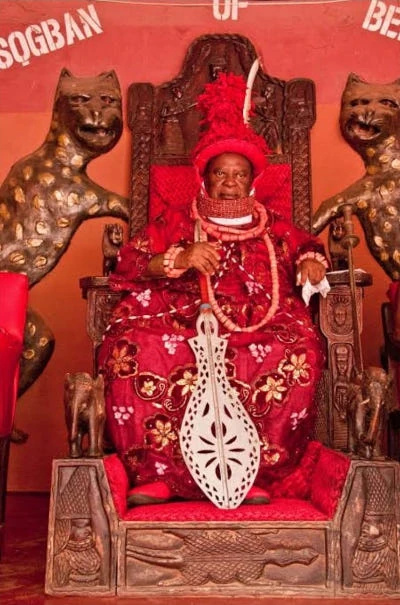
The Esogban occupies an exceptionally important position within the traditional hierarchy of Benin Kingdom.
Among the senior palace chiefs, the title ranks immediately after the Iyase, the traditional prime minister, within the Eghaevbo n’Ore.
The office carries responsibilities associated with counsel, customary authority and the preservation of important traditions.
Chief Edebiri approached those responsibilities with the seriousness they deserved.
He was a traditionalist, but certainly not an ordinary one. He possessed an unmistakable swagger and carried himself with confidence and dignity.
His presence commanded attention.
And when he spoke on matters concerning Benin customs, history or the palace, people listened.
To many, he became the Oracle of Benin.
Not simply because of the office he occupied, but because of the extraordinary knowledge he possessed.
He understood that traditional institutions were not merely ceremonial relics. They were living repositories of identity, memory and continuity.
In a rapidly changing society, he believed that the history of Benin Kingdom had to be protected from distortion, neglect and eventual disappearance.
He therefore became one of its most passionate defenders.
The Encounter I Have Never Forgotten
There is one particular experience with Chief Edebiri that has remained with me for decades.
It happened during one of my early morning visits.
As usual, we were sitting on the balcony of his Ogiesoba residence, overlooking the street.
Suddenly, a cat jumped into the compound.
What happened next was extraordinary.
Chief Edebiri became visibly animated.
He addressed the animal directly, demanding to know what it was doing in his compound.
He reminded it that he had previously warned it against returning.
Then he challenged it, as though addressing an unwelcome visitor who had deliberately ignored an earlier instruction.
Almost immediately, the cat jumped out of the compound.
I was astonished.
For a moment, I wondered what exactly I had witnessed.
Eventually, curiosity overcame caution.
I asked Chief whether he genuinely believed the cat could hear and understand everything he had said.
He looked at me.
Then, with the calm assurance that was so characteristic of him, he replied:
“My Son, May God not let you see what will make you believe.”
I answered immediately.
Amen!
That encounter remains one of my most treasured memories of the Esogban.
It revealed something about the man that no formal biography could adequately capture.
He inhabited a world in which history, tradition, spirituality and lived experience were closely intertwined.
Whether one shared his beliefs or not, one could never doubt the strength of his convictions.
And Chief Edebiri was never a man whose convictions could easily be shaken.
Perhaps one of Chief Edebiri’s most enduring contributions was his determination to document history.
He recognised that an oral tradition, however rich, could become vulnerable when the custodians of its knowledge passed away.
So he wrote.
And wrote.
His publications explored Benin customs, traditional institutions, nationalism, political developments and the lives of important historical personalities.
Among his later works were Tripod of Life: Essence of Benin Tradition and Culture and The Life and Times of Iyase N’Ohenmwen, unveiled during celebrations marking his 93rd birthday in 2022.
These were not merely exercises in nostalgia.
They were efforts to preserve knowledge for generations that might never have the opportunity to sit before the elders who witnessed the events themselves.
In this respect, Chief Edebiri was performing an invaluable public service.
He understood that a people who lose touch with their history risk losing something fundamental about themselves.
His books therefore became an extension of his traditional responsibilities.
Where his voice could not reach, his writings would.
Where his physical presence would eventually disappear, his recorded knowledge could remain.
That is the enduring power of scholarship.
One of the most remarkable things about Chief Edebiri was that age never extinguished his interest in politics.
Even in his nineties, he remained deeply engaged with developments in Nigeria.
He continued to analyse elections, question political decisions and offer his perspectives on the direction of the country.
He was particularly critical of Nigeria’s abandonment of the parliamentary system of government in favour of the American-style presidential system.
In his view, the change had contributed to some of the country’s governance difficulties.
One did not have to agree with every conclusion he reached to appreciate the depth of experience informing his arguments.
He had witnessed Nigerian politics from the colonial period.
He had seen the emergence of nationalist movements.
He had experienced the First Republic, military interventions and the return to civilian government.
He understood how the country had arrived at its present circumstances because he had personally lived through so much of the journey.
Perhaps nothing illustrated his extraordinary political commitment better than his participation in the 2023 general elections.
At 93, Chief Edebiri still went out to vote.
He recalled casting his first ballot in December 1951, when he was just 22 years old.
More than seventy years later, he was still exercising that democratic right.
Consider the significance.
A young man who voted under colonial rule lived long enough to participate in elections in independent Nigeria more than seven decades later.
That was more than longevity.
It was a lifetime of political engagement.
A Teacher Beyond the Classroom
When I reflect on Chief Edebiri today, I do not think first of the ceremonies, titles or public recognition.
I remember the balcony.
The early morning conversations.
The patient explanations.
The extraordinary memory.
And the lessons that gradually helped shape my understanding of politics.
Chief Edebiri belonged to a generation that believed knowledge was meant to be shared.
He understood that mentoring younger people was part of the responsibility of leadership.
His influence extended beyond those who shared his political beliefs.
He could engage across generations and political divides, drawing from decades of experience to illuminate contemporary issues.
He taught me that political meetings are not always what they appear to be.
That listening can sometimes reveal more than speaking.
That history provides essential context for understanding the present.
And that human relationships remain at the heart of political organisation.
Those lessons have stayed with me.
When the Oracle Fell Silent
On July 20, 2023, Chief David Uyunmwun Edebiri passed away in Benin City.
He was 93.
His death marked the passing of one of the most remarkable witnesses to the political and cultural history of modern Nigeria.
For Benin Kingdom, it was the loss of a respected traditional statesman and repository of customary knowledge.
For Nigeria, it was the departure of a nationalist, journalist, political thinker and historian.
For those who benefited from his counsel, it was the loss of an extraordinary teacher.
And for me, it was the loss of a mentor whose influence began long before I fully understood the privilege of knowing him.
Yet I believe there is something comforting about lives such as his.
They do not disappear entirely.
They remain in the books they wrote.
In the institutions they served.
In the history they preserved.
And in the people they taught.
Chief D. U. Edebiri lived through almost a century of extraordinary change.
He saw Nigeria before independence.
He participated in the struggle for freedom.
He witnessed the hopes and disappointments of nationhood.
He embraced the responsibilities of traditional leadership.
And he devoted his later years to preserving the historical memory of his people.
His was not a life without controversy or strongly expressed opinions.
Indeed, it would be difficult to imagine Chief Edebiri without either.
But perhaps that was part of his greatness.
He believed.
He argued.
He challenged.
He taught.
And he remained engaged with the world around him almost until his final days.
For younger generations of Edo people, his story offers a profound lesson.
History must be preserved. Tradition must be understood. Knowledge must be shared. And leadership must extend beyond personal ambition.
In celebrating Chief D. U. Edebiri, we celebrate a man who connected generations, defended cultural identity and helped preserve the story of Benin Kingdom.
But I celebrate something else.
I celebrate the privilege of having known him.
Of having sat at his feet.
Of having listened.
And of having learned.
Sometimes, when I remember those mornings on the balcony at Ogiesoba Street, I can almost hear his voice again.
And, inevitably, I remember that unforgettable encounter with the cat.
His words have never left me.
Perhaps they never will.
The Oracle may have fallen silent, but the lessons remain.
Chief David Uyunmwun Edebiri, OON, the Esogban of Benin Kingdom, remains an enduring Edo Icon.
“The greatest tribute to extraordinary lives is remembrance. They live on in the stories people refuse to stop telling.”
From My Window | A view. An opinion. Our Reality.




Leave a Reply