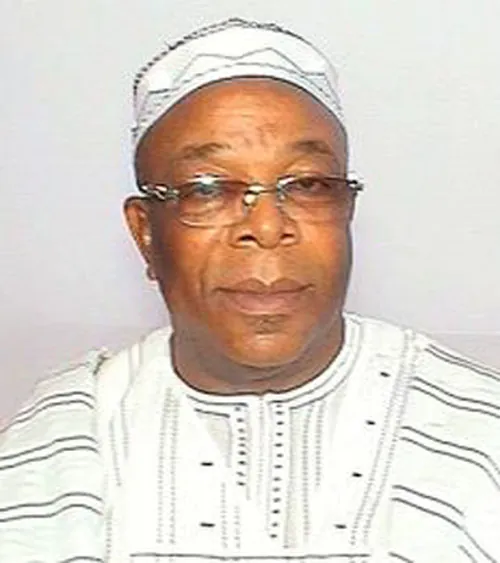
By Senator Ugbesia
Few words in contemporary Nigerian politics have acquired as much negative meaning as “godfatherism.” It is routinely invoked in political speeches, newspaper columns and public debates as though the mere existence of a political godfather is, by definition, evidence of corruption, manipulation or the subversion of democracy.
Yet, as I look back over the years, I have often wondered whether our condemnation of godfatherism has always been entirely sincere. Is godfatherism really the problem, or is the problem simply who occupies the position of the godfather and whose interests that influence serves?
My own political journey has given me a somewhat different perspective on this question.
I have never pretended to be an enemy of political mentorship, loyalty or political relationships. Indeed, I have openly acknowledged Chief Tony Anenih as my political godfather, to whom I remain immensely and unrepentantly loyal. For me, that relationship was not a source of shame. It was built on trust, political mentorship, loyalty and mutual respect.
My experience has therefore taught me that there is a distinction between political mentorship and political domination, just as there is a distinction between loyalty and blind obedience. The word “godfatherism” has, over time, been stretched to cover all forms of political influence, even when such influence is based on genuine relationships and political mentorship.
This distinction is important when examining the evolution of Edo State politics.
Adams Oshiomhole came into Edo politics as the great challenger of the old political order. As Governor, much of his political energy was directed at confronting the established power centres represented by Chief Tony Anenih, Chief Gabriel Igbinedion and Dr. Samuel Ogbemudia. He presented himself as the man who would break the grip of godfatherism and return political power to the people.
It was a powerful political message, and it resonated strongly with a population that had become receptive to the idea of a new political order.
In that struggle, Oshiomhole succeeded spectacularly. The old political architecture was weakened, and he emerged as the dominant political figure in the state. The defeat of the old order became one of the defining narratives of his political career.
He had, in effect, challenged and displaced a generation of political power brokers.
But history has a peculiar way of turning political victories into ironies.
The man who had campaigned against godfatherism gradually became the most influential political godfather in the state. The political platform changed, the personalities changed and the language changed, but the underlying struggle for political control remained remarkably familiar.
Who determines the candidate?
Who decides the successor?
Who controls the political structure?
Who has the final say in determining the direction of the party?
These were essentially the same questions that had defined the political struggles of the old order.
The episode involving his successor, Godwin Obaseki, brought this irony into particularly sharp relief.
Oshiomhole had played a decisive role in bringing Obaseki to power as Governor in 2016. At the time, their political partnership appeared to represent the consolidation of a new political order. But the relationship eventually deteriorated into one of the most bitter political confrontations in Edo’s recent history.
By 2020, Oshiomhole was at the centre of the political struggle over Obaseki’s bid for a second term. Obaseki was eventually denied the APC ticket, left the party and contested the governorship election on the platform of the PDP. He subsequently defeated the APC candidate.
The episode was more than a personal disagreement between a former governor and his successor. It exposed the deeper contradiction inherent in the politics of godfatherism.
A political system can overthrow one godfather without eliminating godfatherism. It can simply replace one centre of political authority with another.
This, perhaps, is the most instructive lesson of the Edo experience.
Oshiomhole did not destroy the phenomenon he had fought. He displaced its earlier custodians and emerged as the dominant figure in the new political order. In the process, he demonstrated an uncomfortable truth about political power: those who rise by challenging an established political structure can, with time, become custodians of a remarkably similar structure.
This is not peculiar to Oshiomhole. It is a recurring pattern in Nigerian politics.
Political movements are often born in rebellion against an existing order. Their leaders condemn the concentration of political power in the hands of a few, promise to democratise the system and present themselves as liberators. But once they acquire power, the temptation to exercise that power in ways remarkably similar to those they once condemned can become difficult to resist.
The personalities change, but the political architecture survives.
This is where the hypocrisy in the crusade against godfatherism sometimes becomes apparent.
A politician may condemn godfatherism when he is excluded from power, but celebrate political influence when he becomes the beneficiary of it. A politician may denounce the political structure controlled by another person, only to build an even more formidable structure when the opportunity arises.
In such circumstances, the real objection may not be to godfatherism itself. It may simply be to whose godfatherism it is.
That is why I believe we must be more nuanced in discussing this subject.
Political mentorship is not inherently destructive. In every political system, experienced leaders influence younger politicians. Political movements require organisation. Political leaders build networks of trust and loyalty. People who have served together over many years naturally develop political relationships.
The danger begins when such relationships become instruments for the capture of institutions, the suppression of legitimate political competition and the denial of people the freedom to choose their leaders.
That is the line we must learn to distinguish.
My own relationship with Chief Tony Anenih illustrates this distinction from my personal experience. I have openly proclaimed him my political godfather and remain immensely and unrepentantly loyal to him. But my loyalty does not mean that I believe every form of political influence should be accepted without question. Loyalty, in my understanding, is a personal and political virtue; domination is something entirely different.
The real challenge, therefore, is not merely to defeat a godfather. It is to build political institutions strong enough to make godfatherism unnecessary.
Until political parties become genuinely institutionalised, until internal democracy becomes meaningful, until candidates are chosen through credible and transparent processes, and until political structures become stronger than individual personalities, the tendency towards godfatherism will remain.
Remove one godfather and another will emerge.
Defeat one political machine and another will take its place.
This is why the Edo experience offers a lesson that goes beyond the personalities of Anenih, Igbinedion, Ogbemudia, Oshiomhole or Obaseki. It tells us something fundamental about Nigerian politics: political power does not necessarily abolish godfatherism; sometimes, it merely changes the identity of the godfather.
That, perhaps, is the greatest irony of the godfatherism crusade.
The crusader against godfatherism can become the godfather.
And the political movement that promises to liberate the people can, if institutions are not strengthened, simply reproduce the same political culture under a different name.
The ultimate test, therefore, is not whether a politician can defeat a godfather.
The real test is whether, after defeating the godfather, he can build a political system in which no individual is powerful enough to become one.
From My Window | A view. An opinion. Our Reality.
Leave a Reply