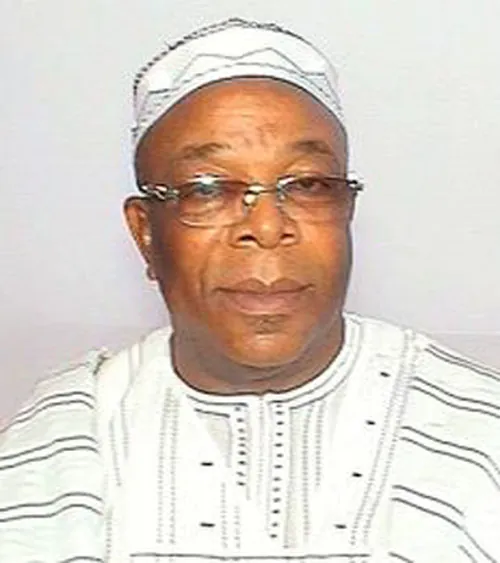
By Senator Ugbesia
Politics is ultimately about people, and people are complicated. After many decades in Nigerian public life, I have come to realise that politics cannot be fully understood by studying constitutions, party manifestos or electoral arithmetic alone. One must also understand human nature.
Politics brings out some of the best qualities in people—courage, loyalty, sacrifice, patriotism and commitment. But it can also expose some of our less admirable instincts: ambition, jealousy, greed, fear, betrayal, opportunism and the desire for self-preservation.
I have experienced enough of Nigerian politics to know that political relationships are rarely static. They evolve with circumstances, and sometimes they change dramatically when power or ambition enters the equation.
The Politics of Loyalty
One of the most difficult lessons I have learnt is that political loyalty must never be taken for granted.
My relationship with Chief Anthony Enahoro is an example of a political relationship that went beyond immediate political convenience. I worked with him as Director of Youth Mobilisation through the instrumentalities of Mr. L. L. Borah. Over time, we became very close. My decision in 1984 to name my son Enahoro after Chief Anthony Enahoro was a personal expression of honour, reverence and loyalty to a man whom I deeply respected.
That relationship also influenced my commitment to the movement for the creation of Edo State. For me, the struggle was not simply another political assignment. It was connected to people, relationships and convictions that had developed over many years.
This taught me an important lesson: political commitment can have a deeply personal foundation. Sometimes people participate in political movements because they believe in the cause; sometimes because of the people leading it; and sometimes because of both.
Mentorship and Ambition
But politics also teaches another lesson: every mentor must understand that a successful follower will eventually develop ambitions of his own.
I have watched political leaders build followers, protégés and loyalists who eventually became powerful enough to challenge the very structures that produced them.
This is not necessarily a sign of ingratitude. It is often the inevitable consequence of political growth.
A young politician may begin by looking up to a senior political figure as a mentor. He learns the ropes, builds relationships and acquires influence. Eventually, however, he begins to ask himself a natural question: When will
It be my turn
That question has shaped many political careers in Nigeria.
The difficulty arises when the mentor expects permanent obedience while the protégé begins to see himself as an independent political actor. At that point, what began as mentorship can become competition.
I have seen this dynamic reflected in the relationships between Adams Oshiomhole and Pastor Osagie Ize-Iyamu, between Oshiomhole and Godwin Obaseki, and in the complicated political relationship between Rotimi Amaechi and Nyesom Wike. In each case, the circumstances were different, but the underlying human element was remarkably similar: relationships forged around political cooperation can become strained when ambitions, interests and perceptions of succession collide.
The 2007 Experience
My own experience of the 2007 gubernatorial contest in Edo State remains one of the clearest illustrations of the intersection between politics and human nature.
I had been encouraged by Chief Tony Anenih to enter the gubernatorial race. I accepted the challenge and began the process of building support.
But political calculations at the highest level eventually intervened. I was asked by the President to withdraw from the contest to give Professor Oserheimen Osunbor the party’s ticket.
It was a painful experience.
Yet with the passage of time, I have come to see it not merely as a personal political disappointment but as a lesson in the nature of political power. Political decisions are frequently made at several levels simultaneously. What appears logical from the standpoint of an individual aspirant may look completely different from the standpoint of a party leader, a governor, a president or a political strategist trying to balance competing interests.
Politics is therefore rarely a straight line between merit and reward.
Sometimes the person who works hardest does not get the ticket. Sometimes the most experienced candidate does not emerge. Sometimes loyalty is rewarded; at other times it is overlooked. And sometimes decisions are made for reasons that have little to do with the qualities of the individual concerned.
I learnt to accept this reality without allowing it to destroy my sense of self-worth.
The Godfather and the Follower
My relationship with Chief Tony Anenih also taught me much about political mentorship and godfatherism.
I have never been uncomfortable acknowledging Chief Anenih as my political godfather. I say this openly because I believe there is a difference between acknowledging political mentorship and surrendering one’s independence.
A political godfather can provide guidance, protection, access and opportunity. But the relationship inevitably becomes complicated when the protégé develops an independent political identity.
The same person who once depended on the godfather may eventually become powerful enough to resist him.
That is where human nature enters the equation.
The godfather may think, I made you.
The protégé may think, You helped me, but I have now become my own man.
Both perspectives may contain some truth.
The tragedy begins when either side refuses to acknowledge the legitimate evolution of the relationship.
When Friends Become Opponents
Perhaps the most fascinating aspect of politics is how quickly political circumstances can change personal relationships.
I have seen people who once embraced one another warmly become political opponents. I have also seen people who once opposed each other discover common interests and become allies.
This does not always mean that the friendship was fake or that the disagreement is insincere. It simply means that politics introduces another dimension into human relationships.
In ordinary life, friendship may be based largely on affection and shared experiences. In politics, friendship is often complicated by power, influence, ambition and competing constituencies.
A person may genuinely like you and still oppose you politically.
That is one of the hardest realities for people outside politics to understand.
Power and Self-Preservation
Another powerful force in political behaviour is self-preservation.
When people are in power, they often believe that their alliances will last forever. When they begin to lose power, they suddenly discover how many of their relationships were conditional.
Power attracts people.
It also changes the behaviour of those around the person who possesses it.
When you hold political office, people return your calls, visit you, seek your advice and demonstrate extraordinary loyalty. When the office disappears, many of those same people disappear with it.
I have experienced enough of public life to understand that this is not always personal. Sometimes people simply move towards whoever they believe can help them achieve their objectives.
It is one of the reasons I have learnt to distinguish between friendship and political association.
They are not always the same thing.
The People Are Not Always Innocent
It is tempting to blame politicians for everything that is wrong with Nigerian politics. Politicians certainly deserve much of the criticism they receive. But after many years of observing elections and political mobilisation, I have also come to believe that society itself must accept some responsibility.
Politicians do not operate in a vacuum.
They emerge from society, and they respond to the incentives created by society.
Where voters demand money, politicians learn to distribute money. Where political supporters demand patronage, politicians build patronage networks. Where loyalty is measured by material rewards, politics becomes transactional.
This does not excuse corruption or manipulation. Rather, it reminds us that political culture is created by both leaders and followers.
The politician and the voter are part of the same ecosystem.
What Politics Has Taught Me About People
Looking back over my journey, I have become less interested in judging people solely by their political positions and more interested in understanding what motivates them.
I have learnt that a person can be genuinely principled and still make compromises.
A loyal person can become ambitious.
A friend can become an opponent.
An opponent can become a friend.
A follower can become a leader.
A mentor can become a rival.
And someone who appears powerful today can become politically irrelevant tomorrow.
These are not merely Nigerian experiences. They are reflections of human nature.
What makes Nigerian politics particularly fascinating is the intensity with which these human characteristics are expressed. Our politics is deeply personal. Political disagreements can become family disagreements; party disagreements can become lifelong battles; and political friendships can become bonds that survive generations.
That is why I have always believed that one must enter politics with both conviction and realism.
Conviction tells you what you stand for.
Realism tells you what to expect from people.
You need both.
The Final Lesson
If there is one lesson my political journey has taught me, it is that power is temporary, but character endures.
Political office comes and goes. Parties rise and fall. Governments change. Alliances are formed and broken. Those who appear invincible today may be forgotten tomorrow.
What remains is how we treated people, the principles we defended, the relationships we honoured and the choices we made when circumstances were difficult.
I have therefore learnt not to measure people only by what they do when they are powerful. I pay particular attention to how they behave when they have nothing to gain.
That is when character is most clearly revealed.
Politics may be a contest for power, but beneath the struggle for power is the enduring drama of human nature.
Politics does not create human nature. It exposes it.
And after a lifetime in Nigerian politics, I have learnt that understanding people is often more important than understanding politics itself.
From My Window | A view. An opinion. Our Reality.
Leave a Reply