From Plumbing to an Industrial Empire
By Chris Osa Nehikhare | Publisher, From My Window
Some success stories begin in boardrooms. Others begin with very little.
Some begin as a man learning a trade and trying to find his place in a young country.
Then, slowly, something begins to happen. The apprentice becomes the tradesman. The tradesman becomes the entrepreneur. And the entrepreneur becomes the industrialist.
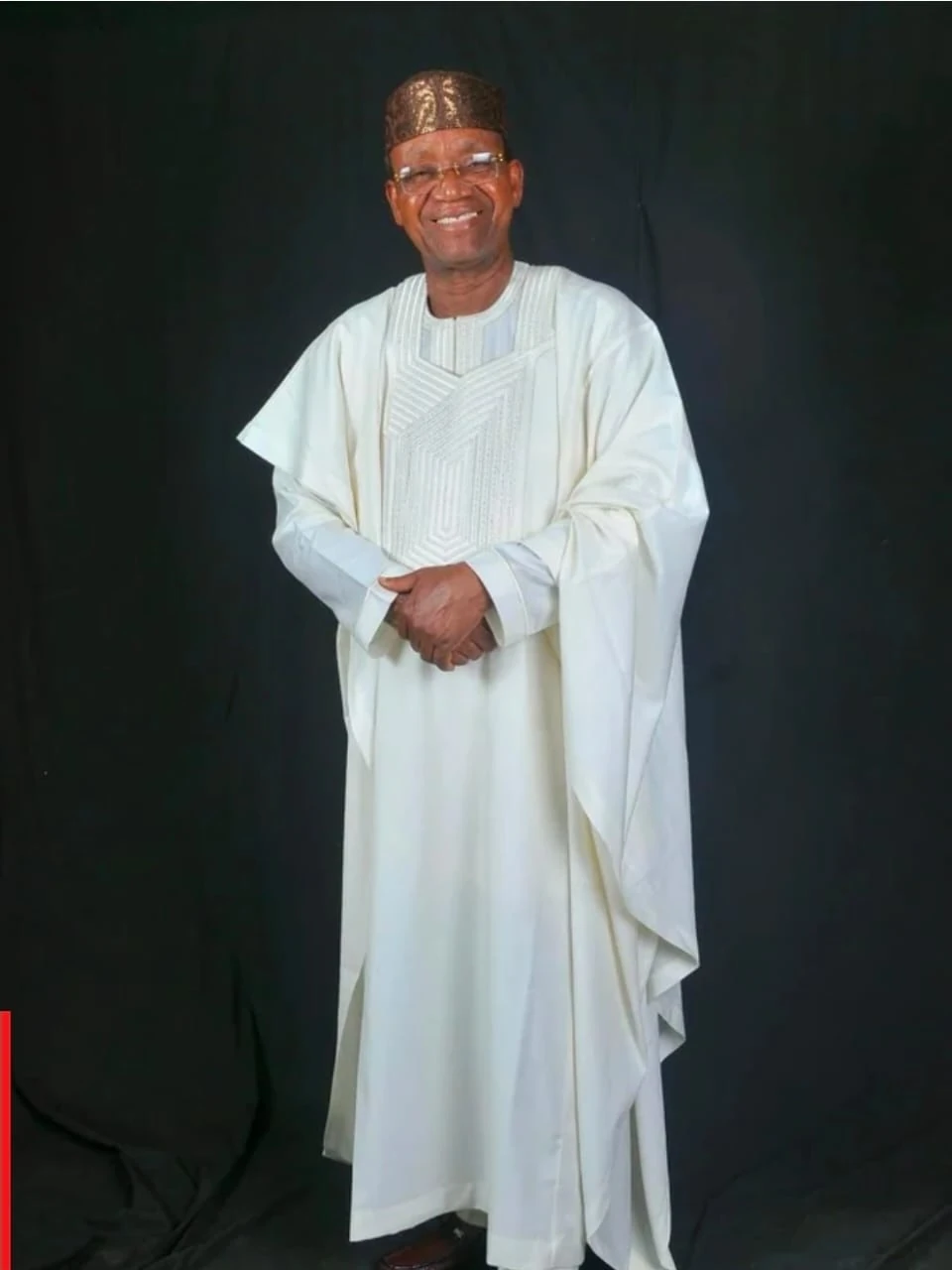
That, in many ways, is the story of Chief (Dr.) Deacon Vincent Agenmonmen, MFR, JP, FNIM, the Odalo of Uromi.
Born on September 25, 1945, in Uromi, in present-day Edo State, Vincent Agenmonmen’s journey did not begin with inherited corporate privilege.
As a young man, he taught at a Catholic school in Uromi.
He subsequently worked as a plumbing assistant with the Ministry of Works and Transportation in Benin City and also had experience as a clerk and stenographer.
Seen against what came afterwards, these may appear like modest beginnings.
But perhaps that is precisely why they matter.
Before there was The Freedom Group, there was a young man acquiring skills, working with his hands and learning.
Then came the entrepreneurial leap.
In 1967, he established Freedom Plumbing Service in Benin City.
It was a small beginning. But there was nothing small about the ambition behind it.
From plumbing, the enterprise expanded. Engineering. Construction. Development. Dredging. And eventually, industrial production.
One particularly significant milestone came in 1978, when Agenmonmen was credited with pioneering indigenous technical dredging in Nigeria.
At a time when many technically demanding areas of Nigerian business were dominated by foreign companies and expatriate expertise, an indigenous entrepreneur was venturing into difficult terrain.
It required more than money. It required technical curiosity, confidence and a willingness to take risks.
Agenmonmen took those risks.
And Freedom kept growing.
Today, The Freedom Group (TFG) is Nigeria’s leading industrial mineral producer, specialising in calcium carbonate, kaolin and dolomite — important raw materials used across several areas of manufacturing and industry.
The Group has also extended its footprint into the consumer market through Olivia Water.
Think about that journey for a moment.
A business that began as a plumbing service in Benin City almost six decades ago evolved into an industrial group producing some of the raw materials upon which other industries depend.
The plumbing assistant had become an industrialist.
And the little business called Freedom had become The Freedom Group.
There is something important about the generation of Nigerian entrepreneurs to which Chief Agenmonmen belongs.
They built in an environment where almost everything had to be learned, sourced or created.
Access to capital was difficult. Technology was limited and infrastructure was inadequate.
And indigenous participation in technically demanding industries was still developing.
Yet they built.
For Agenmonmen, enterprise was not simply about buying and selling.
It was about production. It was about developing technical capacity, about creating businesses that employed people and supplied other industries.
That distinction matters.
Countries ultimately become stronger when their entrepreneurs move from commerce into production.
Chief Agenmonmen made that journey.
But a man’s balance sheet cannot be the complete measurement of his life.
Chief Agenmonmen’s footprint extends beyond business into community service, education, philanthropy and mentorship.
As far back as 1981, he instituted an annual award for outstanding postgraduate business students at the University of Ife, now Obafemi Awolowo University.
Over the years, he has supported people, institutions and causes, while playing active roles in professional, social and community organisations.
Perhaps one of the quieter measures of a successful man’s influence is not simply the companies bearing his name.
It is the number of people who can say:
He gave me an opportunity.
Businesses build wealth.
People build legacies.
The most enduring entrepreneurs eventually learn to do both.
The years have brought recognition.
He is Chief (Dr.) Deacon Vincent Agenmonmen, MFR, JP, FNIM — a Fellow of the Nigerian Institute of Management and recipient of the national honour of Member of the Order of the Federal Republic.
In his native Uromi, he is the Odalo of Uromi.
In February 2025, Edo State University, Uzairue, also conferred an honorary doctorate on him in recognition of his accomplishments and contributions to society.
Yet there is another form of recognition that is perhaps more unusual.
His name has entered the geography of Benin City itself.
Vincent Agenmonmen Avenue.
People give directions with it.
Businesses use it in their addresses.
Residents call the name every day, sometimes without thinking about the man behind it.
There is something quietly enduring about that.
For me, however, the most compelling part of the Vincent Agenmonmen story remains where it started.
Teacher.
Plumbing assistant.
Clerk.
Entrepreneur.
Industrialist.
Too often, when we celebrate successful people, success has already erased the evidence of struggle.
We see the factory and forget the workshop.
We see the chairman and forget the apprentice.
We see the wealth and forget the work.
Chief Agenmonmen’s story reminds us never to despise a small beginning.
There was no Freedom Group when he started.
There was Freedom Plumbing Service.
And that was enough.
Enough to begin.
Enough to dream.
Enough to build upon.
Nearly six decades later, the name Freedom survives, but the enterprise bearing it bears little resemblance to the modest business from which it began.
That may be the greatest business lesson in the story.
You do not necessarily have to begin big.
You have to begin.
Then learn.
Build.
Take risks.
Diversify.
Create value.
And, when opportunity comes, grow.
There are many ways to measure accomplishment.
Titles.
Honours.
Factories.
Wealth.
Buildings.
But perhaps another measure is endurance.
Can what you started survive long enough to become bigger than you?
Can it employ others?
Can it evolve?
Can it move from one generation to another?
Can it continue creating value long after the excitement of its founding has passed?
Chief Vincent Agenmonmen started with plumbing.
Today, The Freedom Group produces industrial minerals.
Along the way came engineering, construction, dredging, manufacturing and other ventures.
From my window, there is something profoundly inspiring about that journey.
The young plumbing assistant did not wait for perfect circumstances.
He started where he was.
With what he knew.
And he built.
Perhaps the name he chose for that small plumbing business in 1967 was prophetic after all.
Freedom.
Almost sixty years later, the name remains.
So does the enterprise.
And so does the lesson.
Chief (Dr.) Deacon Vincent Agenmonmen, MFR, JP, FNIM, the Odalo of Uromi, is an Edo Icon.
From My Window | A view. An opinion. Our Reality.

Leave a Reply